Best Design Inspiration Websites 2026
A practical roundup review of the best options for best design inspiration websites, with quick picks, comparison notes, mini reviews, buying advice, and FAQ.
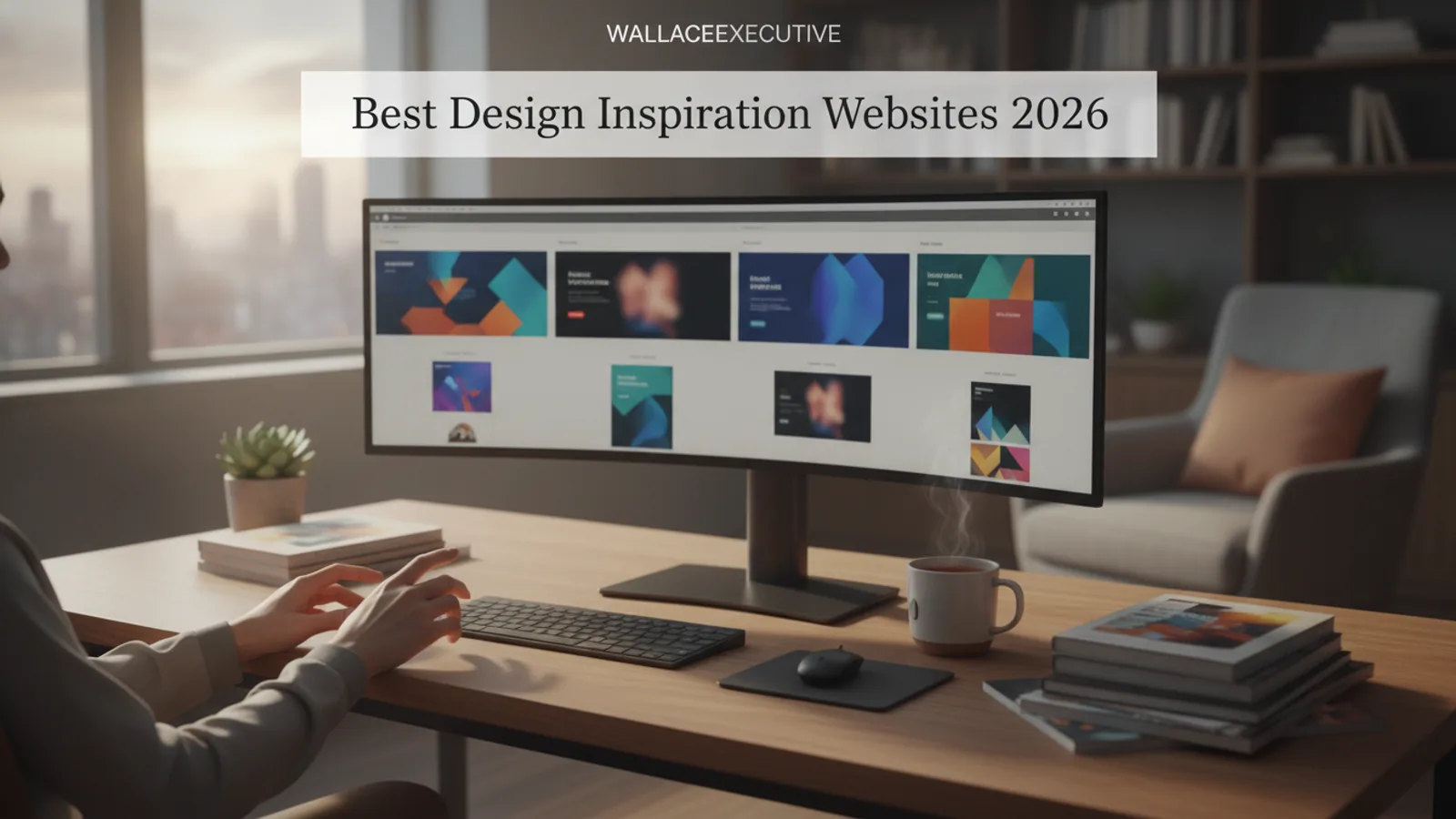
Best Design Inspiration Websites 2026
Roundup review
To find the best design inspiration websites for 2026, our team evaluated over 20 leading platforms. We analysed each based on the variety of content, quality of curation, search functionality, and community features. After extensive comparison, we determined that Behance is the best overall choice for most designers due to its immense library, detailed case studies, and seamless integration with the Adobe ecosystem.
Quick Comparison
Behance
- Unmatched variety of disciplines
- Detailed project case studies
- Excellent Adobe integration
Awwwards
- Best for cutting-edge web design
- Strict, expert-led curation
- Highlights technical excellence
Dribbble
- Ideal for UI/UX & product design
- Focus on component-level "shots"
- Strong community and job market
Siteinspire
- Superb manual curation
- Clean, minimalist aesthetic
- Powerful, specific tagging system
- Powerful visual discovery algorithm
- Excellent for mood boarding
- Broad range of creative fields
The Best Design Inspiration Websites
- Behance - Best overall
- Awwwards - Best for Web Design
- Dribbble - Best for UI/UX & Product Design
- Siteinspire - Best for Curated Minimalism
- Pinterest - Best for Broad Visual Discovery
Behance
Behance stands as the undisputed champion for its sheer scale, depth, and integration into the professional creative workflow. Owned by Adobe, it's more than just a gallery; it's a comprehensive portfolio platform where designers showcase full projects, from initial sketches to the final product. This focus on the complete case study is its greatest strength, offering invaluable insight into the "why" behind design decisions. Whether you're a graphic designer, illustrator, UI/UX professional, or photographer, Behance provides a high-quality, searchable firehose of inspiration that is both practical and aspirational. Its curated galleries and live streams add another layer of discovery, making it an indispensable daily resource.
Pros
- In-depth case studies show the full design process
- Covers a massive range of creative fields
- Seamless integration with Adobe Creative Cloud
- High-quality curated galleries and collections
- Features job listings and freelance opportunities
Cons
- The sheer volume of content can be overwhelming
- Requires careful filtering to find top-tier work
Awwwards
For web designers and developers seeking the absolute pinnacle of digital design, Awwwards is the essential destination. It operates as a competition, with a jury of experts scoring submitted websites on design, usability, creativity, and content. This rigorous, transparent judging process ensures that every featured site is a masterclass in modern web design. Winning a "Site of the Day" is a mark of prestige. For those looking for inspiration, it’s a direct feed of the most innovative, technically impressive, and visually stunning websites currently live on the internet. It's less about quantity and all about world-class quality, making it the perfect resource for pushing creative boundaries in web and interaction design.
Pros
- Features the best of the best in modern web design
- Transparent scoring from a panel of industry experts
- Excellent for spotting emerging trends and technologies
- Clean interface focused entirely on the work
- Categorisation by industry, tech, and awards
Cons
- Exclusively focused on website design
- Some featured designs prioritise artistry over usability
Dribbble
Dribbble is the go-to platform for product designers, UI/UX specialists, and illustrators looking for quick, component-level inspiration. Its signature format of small screenshots, or "shots," makes it incredibly easy to scan for ideas on specific elements like buttons, login forms, dashboards, and animations. While it sometimes faces criticism for promoting aesthetics over function (the so-called "Dribbblisation" of design), its value as a visual search engine for UI patterns is undeniable. The platform also has a vibrant community, a robust job board, and features for designers to find freelance work, making it a central hub for the product design industry. For targeted UI inspiration, nothing is faster or more focused.
Pros
- Perfect for finding specific UI components and patterns
- Vibrant and active community of designers
- Excellent job board for full-time and freelance roles
- Easy to quickly browse and digest visual ideas
- Strong focus on illustration and icon design
Cons
- "Shots" often lack real-world project context
- Can encourage trend-chasing over problem-solving
- Best features are locked behind a Pro subscription
Siteinspire
In a world of visual noise, Siteinspire offers a quiet, beautifully curated refuge. It is a meticulously maintained gallery of the finest web and interactive design, with a strong emphasis on clean, elegant, and minimalist aesthetics. Unlike algorithmic feeds, every site on Siteinspire is hand-picked. Its true power lies in its incredibly specific and intelligent tagging system. You can filter by style (e.g., "minimal," "brutalist"), type ("portfolio," "e-commerce"), and subject matter, allowing for highly targeted searches that yield consistently high-quality results. For designers who value quality over quantity and have a penchant for sophisticated, type-driven layouts, Siteinspire is an essential bookmark. It's the calm, focused alternative to the overwhelming nature of larger platforms.
Pros
- Exceptional manual curation and quality control
- Powerful and granular tagging and filtering system
- Clean, fast, and ad-free user interface
- Focuses on elegant, minimalist, and type-forward design
Cons
- Significantly smaller library than Behance or Pinterest
- Updates are less frequent than on larger platforms
- Aesthetic is specific and may not suit all projects
While not a dedicated portfolio site for professionals, Pinterest's power as a visual discovery engine is unmatched. Its algorithm excels at understanding visual relationships, making it an incredible tool for the early stages of a project: creating mood boards, exploring colour palettes, and gathering thematic imagery. You can start with a single image and quickly find hundreds of related ideas across design, photography, architecture, and fashion. This cross-pollination is a huge creative asset. For designers, it's best used as a starting point or a "top-of-the-funnel" inspiration source. While you need to be mindful of unattributed work and variable quality, no other platform can take you on such a wide-ranging and serendipitous visual journey.
Pros
- Incredibly powerful algorithm for visual discovery
- The best platform for creating and organising mood boards
- Draws inspiration from a vast array of creative fields
- Excellent for exploring colour palettes and visual themes
Cons
- Quality of content can be highly variable
- Many images lack proper attribution or link to the source
- Heavy on ads and promoted content
- Not a professional portfolio platform
Buying Guide: How to Choose a Design Inspiration Website
The "best" inspiration website depends entirely on your specific needs, discipline, and workflow. Here’s a practical guide to choosing the right platform for you.
Define Your Design Niche
Your primary discipline is the most important factor. A web developer and a brand identity designer have vastly different needs.
- Web & Interaction Designers: You need to see live examples. Platforms like Awwwards and Siteinspire are invaluable because they showcase real, functional websites, allowing you to analyse layouts, animations, and user flows.
- UI/UX & Product Designers: Your focus is often on components and patterns. Dribbble is purpose-built for this, letting you quickly find examples of dashboards, buttons, and mobile app screens. Behance is better for seeing how those components fit into a larger product case study.
- Graphic Designers, Illustrators, & Brand Specialists: You need breadth and depth. Behance is ideal for its detailed branding case studies, while Pinterest is fantastic for pulling together mood boards with broader visual themes.
Curation vs. Volume: The Signal-to-Noise Ratio
Decide if you prefer a tightly controlled stream of elite work or a massive, searchable database where you do the filtering.
- High Curation (Low Noise): Sites like Awwwards and Siteinspire have a human gatekeeper. Every single piece is vetted for quality. This saves you time but offers a narrower, more opinionated view of what constitutes "good" design.
- High Volume (More Noise): Platforms like Behance and Pinterest are algorithmic or community-driven. They offer an ocean of content. This is powerful for discovery but requires you to use filters and develop a critical eye to separate the excellent from the average.
Process vs. Polished Final Product
Do you need to see the finished, pixel-perfect UI, or do you want to understand the strategic thinking that led to it?
- Focus on Process: Behance is the clear winner here. Its case study format encourages designers to show their work—from sketches and wireframes to strategy and final outcomes. This is incredibly valuable for learning and understanding context.
- Focus on Polish: Dribbble is the epitome of the polished final product. Its "shots" are designed to be visually impressive snippets. This is great for aesthetic inspiration but can hide underlying usability issues or business constraints.
Community and Career Features
Some platforms are simply galleries, while others are active professional networks.
- For Networking and Jobs: If you're looking to get hired, build a following, or find collaborators, Behance and Dribbble are top-tier. They have built-in job boards, messaging features, and are closely watched by recruiters and creative directors.
- For Pure Inspiration: If you just want a clean, quiet place to look at great work without the social media layer, Siteinspire is a perfect choice. Its focus is 100% on the design, not the designer's personal brand.
Final Verdict: Best Design Inspiration Websites
After thorough analysis, Behance secures its position as the best overall design inspiration website for 2026. Its unmatched scope across all creative disciplines, combined with its emphasis on detailed, process-oriented case studies, makes it an essential tool for designers at any stage of their career. It provides both high-level conceptual inspiration and granular project details in one place.
However, the best toolkit contains more than one tool. For specialists, supplementing Behance is key:
- Web designers should make Awwwards a daily visit to stay on the cutting edge.
- UI/UX designers will find Dribbble indispensable for quick, component-level problem-solving.
- Designers who value minimalism and hate noise will get the most focused inspiration from Siteinspire.
Ultimately, a combination of these platforms will provide a well-rounded and continuous stream of high-quality creative inspiration to fuel your best work.
Best Design Inspiration Websites 2026 FAQ
Are these design inspiration websites free to use?
Yes, all the websites on our list have robust free tiers that allow you to browse and search for inspiration without any cost. Some platforms, like Dribbble, offer a "Pro" subscription that provides advanced features like a project organiser, more search filters, and better visibility for designers looking for work.
How can I use design inspiration without just copying someone else's work?
This is a crucial skill for any designer. The key is to deconstruct, not duplicate. Instead of copying a layout, ask *why* it works. Analyse its visual hierarchy, use of negative space, typographic scale, and colour theory. Collect inspiration from multiple sources and look for patterns. Combine a colour palette from one project, a typographic style from another, and a grid structure from a third to create something new and unique that solves your specific problem.
What's the main difference between Behance and Dribbble?
The primary difference is the format and depth. Behance is built for comprehensive case studies; designers present an entire project, explaining the brief, their process, and the final outcome. Dribbble is built for "shots," which are small, quick snapshots of a work in progress or a single, polished detail. Think of it this way: Behance is the full story, Dribbble is the highlight reel.
Which site is best for finding and hiring freelance designers?
Both Behance and Dribbble have excellent, dedicated job boards and are actively used by companies and agencies to find talent. Dribbble's Pro subscription specifically offers features to make designers more visible to potential clients. Behance's connection to the Adobe ecosystem also makes it a prime location for sourcing high-calibre creative professionals.